Quick Picks
Our Recommendations
 Best Overall
Garmin
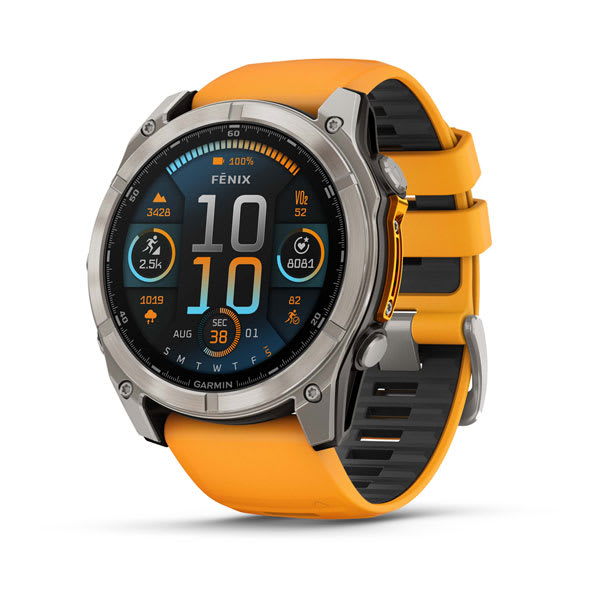
Fenix 8 Solar
Premium outdoor performance
The Fenix 8 Solar combines premium materials, advanced navigation, detailed mapping, and elite-level fitness tracking into one of the most capable outdoor smartwatches currently available.
Pros
- +Exceptional mapping and navigation
- +Premium AMOLED display
- +Outstanding multisport features
- +Excellent build quality
Cons
- −Very expensive
- −More complex than some users need
 Best Value
Garmin
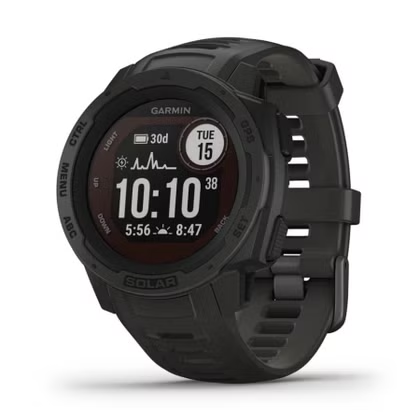
Instinct 2 Solar
Battery life and rugged simplicity
The Instinct 2 Solar remains one of the most practical outdoor watches for hikers, hunters, backpackers, and overlanders prioritizing reliability and battery efficiency over luxury features.
Pros
- +Excellent battery life
- +Very rugged design
- +Simple and reliable interface
- +Excellent value for outdoor users
Cons
- −Lower-resolution display
- −No full onboard mapping
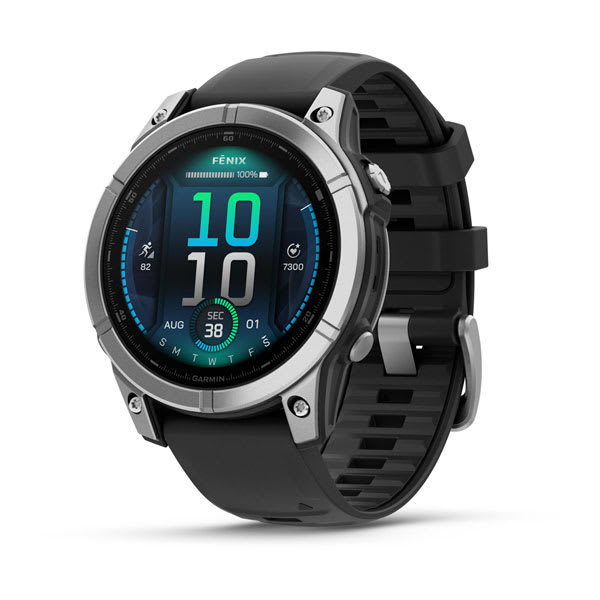 Best Premium Features
Garmin
Fenix E
Balanced premium performance
The Fenix E delivers much of the premium Fenix experience while sitting slightly below Garmin's flagship pricing tiers.
Pros
- +Excellent navigation tools
- +Strong battery performance
- +Premium design and durability
- +Advanced training metrics
Cons
- −Still expensive
- −Heavier than simpler outdoor watches
The key differences between Fenix and Instinct
The Fenix and Instinct lines aren't really competing with each other. They target different priorities.
The Fenix is Garmin's premium flagship platform. Expect AMOLED displays, full topographic maps, sapphire crystal options, titanium materials, and an enormous feature set built for serious multisport athletes.
The Instinct goes the other direction. It strips features back to the essentials, leans on a monochrome memory-in-pixel display, and uses tougher polymer materials to keep weight, cost, and battery drain down.
Both watches are excellent. They're just built for different users.
AMOLED vs monochrome displays
The Fenix's AMOLED screen looks beautiful. Maps are sharp, colors are vibrant, and the interface feels modern.
The Instinct's monochrome display looks dated by comparison, but it's deliberately chosen. It's readable in direct sunlight without any backlight, draws almost no power, and never washes out on a snowfield or sand.
If you mostly use the watch in town and around camp, AMOLED wins. If you live outside and want to glance at the watch a hundred times a day without thinking about battery, monochrome is the smarter call.
Battery life in the real world
On paper, both lines post huge battery numbers. In practice, Instinct still pulls clearly ahead during heavy outdoor use.
A Fenix 8 Solar can comfortably handle a week of mixed use, but turning on AMOLED always-on, full GPS tracking, and music playback drains it noticeably faster.
The Instinct 2 Solar regularly stretches into multiple weeks of normal use, and with enough sun exposure, it can effectively run indefinitely in low-power modes.
For thru-hikers and long backcountry trips, that difference matters more than any feature comparison.
Hiking performance
Both watches handle day hiking and weekend trips extremely well.
GPS accuracy is strong on both, elevation tracking is dependable, and core hiking metrics are nearly identical in practice.
The Fenix offers more on-watch detail, while the Instinct just feels lighter, simpler, and more disposable on the trail.
For day hikers, the gap between them is much smaller than the price difference suggests.
Backpacking and multi-day trips
Multi-day trips reward efficiency.
The Instinct's battery life means you can leave the charger at home for most trips under two weeks. That's a real, tangible benefit when every gram in the pack matters.
The Fenix lasts long enough for most thru-section trips, but you'll likely want a small power bank for trips longer than a week with full GPS recording on.
For backpackers who care about navigation more than battery life, the Fenix is worth the extra weight on the wrist. For everyone else, the Instinct is hard to beat.
Tactical and hunting use
Hunters and tactical users tend to gravitate toward the Instinct, and for good reason.
It's tough, low-profile, and doesn't light up like a phone screen at dawn or dusk. The monochrome display is easy to read in any light without giving away your position.
The Fenix works fine in these settings too, but the AMOLED screen and bigger case feel less at home in a sit-and-wait scenario.
Trail running
For trail runners, the Fenix has a clear advantage.
Advanced training metrics, recovery tracking, route guidance, and richer post-run analysis are all genuinely useful for runners working toward specific goals.
The Instinct still tracks pace, distance, heart rate, and elevation accurately, but it's a simpler training tool.
Casual trail runners are well-served by either. Serious runners typically prefer the Fenix.
Smartwatch features
If smartwatch features matter to you, the Fenix wins easily.
Notifications look better on the AMOLED screen, music storage and playback feel polished, and Garmin Pay works smoothly.
The Instinct has most of the same features, but they're functional rather than enjoyable. It's a watch designed for outside, not for everyday office life.
Durability
Both watches are extremely durable.
The Instinct is built around a fiber-reinforced polymer case that shrugs off drops, scrapes, and rock strikes without flinching.
The Fenix uses higher-end materials, including titanium and sapphire on certain models, which look better and resist scratches well, but feel slightly more precious in rough use.
If you genuinely beat up your gear, the Instinct is the more relaxed choice.
Who should buy the Fenix
Buy the Fenix if you want a watch that does everything well.
It's the right pick for hikers who navigate from the wrist, multisport athletes who want detailed training data, and users who genuinely appreciate a premium AMOLED experience.
It's also the better choice if you wear the same watch in the office and on the trail.
Who should buy the Instinct
Buy the Instinct if you mostly care about battery life, durability, and outdoor reliability.
It's ideal for thru-hikers, hunters, overlanders, and anyone who wants a tough watch that they don't need to think about.
It's also a strong pick for users who don't need maps, mobile payments, or AMOLED screens and would rather not pay for them.
Price and value
The Instinct is one of the best values in outdoor watches today.
For under $400, you get genuinely useful GPS tracking, excellent battery life, and a watch that will likely outlast most of the gear in your pack.
The Fenix is expensive, but you're paying for premium materials, real maps, and a deeper feature set. For users who actually use those features, it's worth the upgrade.
For users who don't, the extra spend is largely wasted.
Final recommendations
Most outdoor users will be happiest with the Instinct 2 Solar. It's lighter, tougher, lasts longer, and costs less.
Hikers and athletes who want full mapping and a premium daily-wear experience should jump straight to the Fenix 8 Solar.
The Fenix E sits comfortably in between. It offers most of the Fenix experience without quite touching flagship pricing, and it's the easiest recommendation for users torn between the two lines.