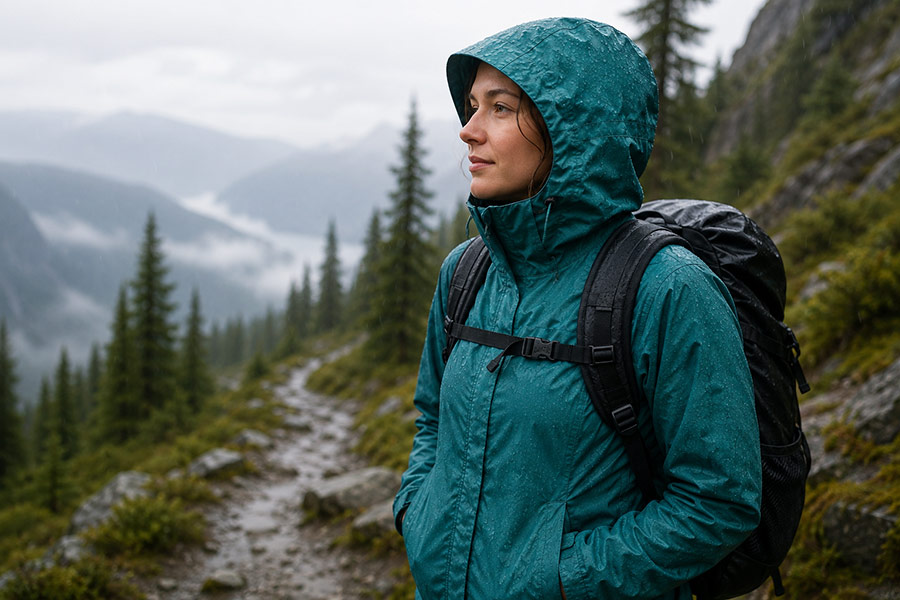
What Makes a Good Lightweight Rain Jacket?
A good lightweight rain jacket should protect you from steady rain without feeling stiff, noisy, or bulky. The best options for hiking and travel are easy to pack, comfortable over a base layer, and breathable enough for active use.
For most people, the sweet spot is a jacket that:
- Weighs under one pound
- Packs into its own pocket or stuff sack
- Includes adjustable cuffs and hood
- Uses seam-sealed waterproof construction
- Feels comfortable during active movement
Waterproof vs. Water-Resistant
For hiking and travel, waterproof protection matters more than basic water resistance.
A water-resistant windbreaker can handle:
- Light mist
- Brief drizzles
- Dry windy conditions
But it will usually wet through during sustained rain.
A true rain jacket should include:
- Waterproof membrane or coating
- Fully sealed seams
- Durable water repellent (DWR) finish
That combination helps keep rain out while still allowing some body heat and moisture to escape.
Breathability Matters
Breathability is one of the biggest differences between cheap rain shells and higher-quality outdoor jackets.
If a jacket traps too much heat, you may end up soaked from sweat even if the rain never gets through.
Features that improve comfort include:
- Pit zips
- Mesh-lined pockets
- Breathable fabrics
- Ventilation flaps
These features become especially important during:
- Hiking
- Backpacking
- Fast-paced travel
- Humid weather
Packability and Weight
For travel and hiking, the best rain jacket is usually the one you actually carry.
A bulky jacket may offer excellent storm protection, but if it stays at home or buried deep inside your bag, it does not help when the weather changes unexpectedly.
Look for jackets that:
- Compress easily
- Fit into small backpacks
- Take minimal luggage space
- Dry relatively quickly
Hood and Fit
A good hood should adjust around your face without blocking your vision.
For hiking, the hood should:
- Stay secure in wind
- Move naturally with your head
- Work comfortably with hats or beanies
If you plan to use the jacket for cycling or climbing, helmet compatibility may also matter.
The fit should allow light layering underneath without feeling oversized.
A versatile fit matters because many people use the same rain jacket for trails, travel, and everyday city wear.
Best Uses for Lightweight Rain Jackets
Lightweight rain jackets are ideal for:
- Day hikes
- Travel
- Backpacking
- Camping
- Emergency weather protection
- Spring and fall conditions
They are not always the best option for:
- Extreme alpine environments
- Heavy winter storms
- Long exposure in freezing rain
In those situations, a heavier shell may provide better durability and protection.
Final Thoughts
The best lightweight rain jacket is not always the most expensive one.
For most hikers and travelers, the ideal choice balances:
- Waterproof protection
- Breathability
- Packed size
- Comfort
- Durability
If you want one jacket that can live in your backpack or travel bag year-round, choose something light, packable, seam-sealed, and comfortable enough that you will actually wear it when the weather changes.